Posts

Looking at Sci-Fi Through a Rose-Coloured Lens

Image
I love science fiction cinema. It is, by far and away, the genre from which I derive the most joy. I love the exhilarating action sequences, the awe inspiring special effects, the darkened city streets slick with rain, I love the thrill of new technological imaginings, and I love the neo-noir aesthetic that colours these futuristic worlds a darker shade of dystopia (available in limited palettes of blue, green or charcoal). What I love most however, are the skilfully crafted hypothetical futures, which prompt us to ponder human nature and ethics in the here and now. So it is with great joy that I am experiencing the current resurgence of the genre. When the latest blue-tinted trailer explodes onto the screen my skin erupts in a rash of goose pimples, my heart kicks up a beat, and I dare to hope that this is in fact, the next Blade Runner, Terminator 2, Dark City or Matrix . And while many of blockbusters do fail to deliver ( Prometheus, Looper, Elysium and After Earth among the...
What is wrong with "personal responsibility"?

Image
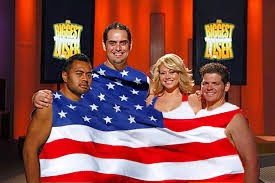
As a university tutor, I read a lot of scholarship critiquing traditional and digital media from a Marxist perspective. Most striking is the somewhat baffling reiteration that “personal responsibility” is a bad thing. Let me elaborate via particularly pertinent example. In 2009 the scholars Laurie Oullette and James Hay published a paper proposing that reality television programs are a symptom of our neo-liberal context. They argue that the narratives of programs such as The Biggest Loser and Queer Eye for the Straight Guy effectively instruct people on how to modify their conduct and assume personal responsibility for their health, their finances and general welfare. The “problem” identified by Oullette and Hay is that these responsibilities were once, under pre-1980 Keynesian economic regimes, assumed by the State (presumably ensuring universal access to key services). According to their reckoning, the ascension of neoliberal economics has led to the shrinking of governments ...

I am not a feminist.

I am not a feminist. The policing of gender is a key cause of violence against individuals. It seems to me that if policing gender is a cause of violence, then it cannot also be the solution.

Transcending sexist tropes and stereotypes

Image
Gender stereotypes and tropes present the contemporary Western world with a very particular type of conundrum. As feminists have pointed out for decades, the dominant ways in which women are represented in popular culture have a tendency of naturalising certain behaviours, roles and identities as ideally feminine, and demonising others as a deviation from propriety and decorum. For instance, before the second wave of feminism washed through the streets of Western civilisation, good women were represented as serving husbands, tending children and repressing sexual desire. Our ability to resist, abolish and transcend these modes of categorisation, is however, fundamentally limited by the fact that such categories have a certain social currency that cannot be easily done away with. For instance, stereotypes and tropes have a symbolic utility, they allow for easy communication of meaning between individuals based in existing and recognisable conventions. Many roles and trope...

Is Copyright Cultural Theft?

Image
Last night my daughter and I settled in to watch the 2013 blockbuster The Lone Ranger, directed by Gore Verbinski, and produced by six companies including Walt Disney Pictures, Jerry Bruckheimer Films and a rather suspect organisation (in terms of Hollywood accounting practice ) called Silver Bullet Productions (II). While hardly a masterpiece, it made for enjoyable Friday evening in. This was, in part, due to that familiar brand of humour that Verbinski imbues into his films including the first three instalments of the Pirates of the Caribbean (2003, 2006, 2007), also produced in collaboration with Disney and Bruckheimer. Moreover, who can resist Johnny Depp’s incarnation as Tonto, despite the fact that it bears a remarkable similarity to his performance and appearance as Jack Sparrow in Pirates. And the film’s connection to Hollywood history runs far deeper that the creative talent involved in its production. To the degree that the  film labours the motif of crash...

Expendable Men and Modern Women in Frozen

Image
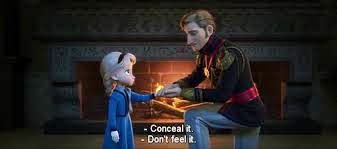
So I have finally got around to viewing Disney’s 2013 animation Frozen (Chris Buck and Jennifer Lee, 2013). Let me say up front that it took me two attempts to get through the film, because I am, for the most part, not a fan of musicals. Also be aware that in the pursuit of an informed critique of gender and feminism, this film review contains numerous spoilers. Frozen transforms Hans Christian Anderson’s classic fairy tale about a villainous The Ice Queen, into a nuanced account of how social prejudice drives desperate people to commit (what are perceived to be) harmful or immoral acts. The film begins with an unfortunate childhood incident when Princess Elsa accidently harms her little sister Princess Anna, when she misdirects her magical power to conjure up ice and snow. This sets the scene for Elsa’s isolation and her life-long quest to suppress the emotions that regularly set off her strengthening powers. Fast-forward a number of years, the girls have come of age, their par...

The logic of popular debates about gender inequality

Image
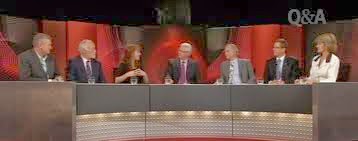
It’s time that media discussion and debate about gender inequality establishes some ground rules, namely logical consistency. Reading Clementine Ford’s opinion piece ‘ Male privilege extends beyond the airwaves ,’ written for the ABC’s drum, brings this to bear. This is a cut-and-dry feminist argument that the lack of women in Australian media is detrimental to female equality in society at large. The evidence offered is quite staggering. For instance in talk back radio this time last year there were only 17 female hosts to 123 male hosts. Moreover, Ford’s critique of the ABC program Q&A is spot on, which regularly populates its panel of experts with a 4:2 ratio of men to women. Interesting she ‘guesses’ that if this ratio was in reverse, there would be a vocal audience backlash. To this last point I would caution that conjecture is not evidence. It is, however, the logical inconsistency of Ford’s central proposition with which I take issue. Ford states: ...